Crockery units,
display and hide.

Half of what a crockery unit holds deserves to be seen. The other half absolutely does not. The craft is in drawing the line between the two — and putting the unit where the plates actually travel.

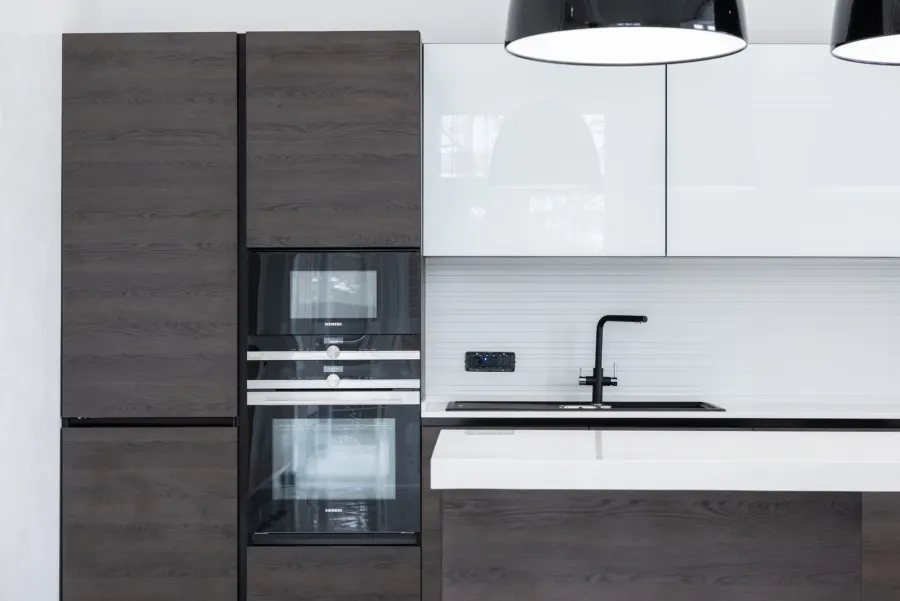
Crockery and utility unit in an Ahmedabad home with glass display shutters, closed lower storage and shelf lighting

Modular — Crockery Units

Show the dinner set.
Hide the tiffins.

In most Ahmedabad homes the crockery unit is asked to do three jobs at once: display the good china, absorb the overflow the kitchen cannot hold, and look composed while a family of six eats in front of it. Those jobs need different doors.

So we split it. Lit glass above for the pieces worth seeing, solid shutters and deep drawers below for everything else, and a bar bay if you entertain. Then we place the whole thing on the line the plates already travel, between the kitchen and the dining table.

  • Glass-shuttered display bays
  • Closed lower storage & deep drawers
  • Integrated bar & stemware racks
  • Cutlery & serving-dish inserts
  • Kitchen-to-dining pass-through units
  • Shelf-edge profile lighting
Plan My Crockery Unit

Scope

What a proper crockery
unit is made of.

Drawn against your dining wall, sized to what you own, and lit so the display section is worth having glass in front of.

  • Placement on the kitchen-to-dining service line
  • Display versus closed-storage split, bay by bay
  • Toughened glass shutters with sealed edges
  • Recessed profile lighting to each display shelf
  • Bar bay with bottle storage and stemware rack
  • Fitted cutlery trays in the shallow top drawers
  • Deep drawers on full-extension runners for platters
  • Shelf heights set to your tallest stack, not a standard
  • Everyday items kept within an unstretched reach
  • Loft above for the once-a-year serving pieces
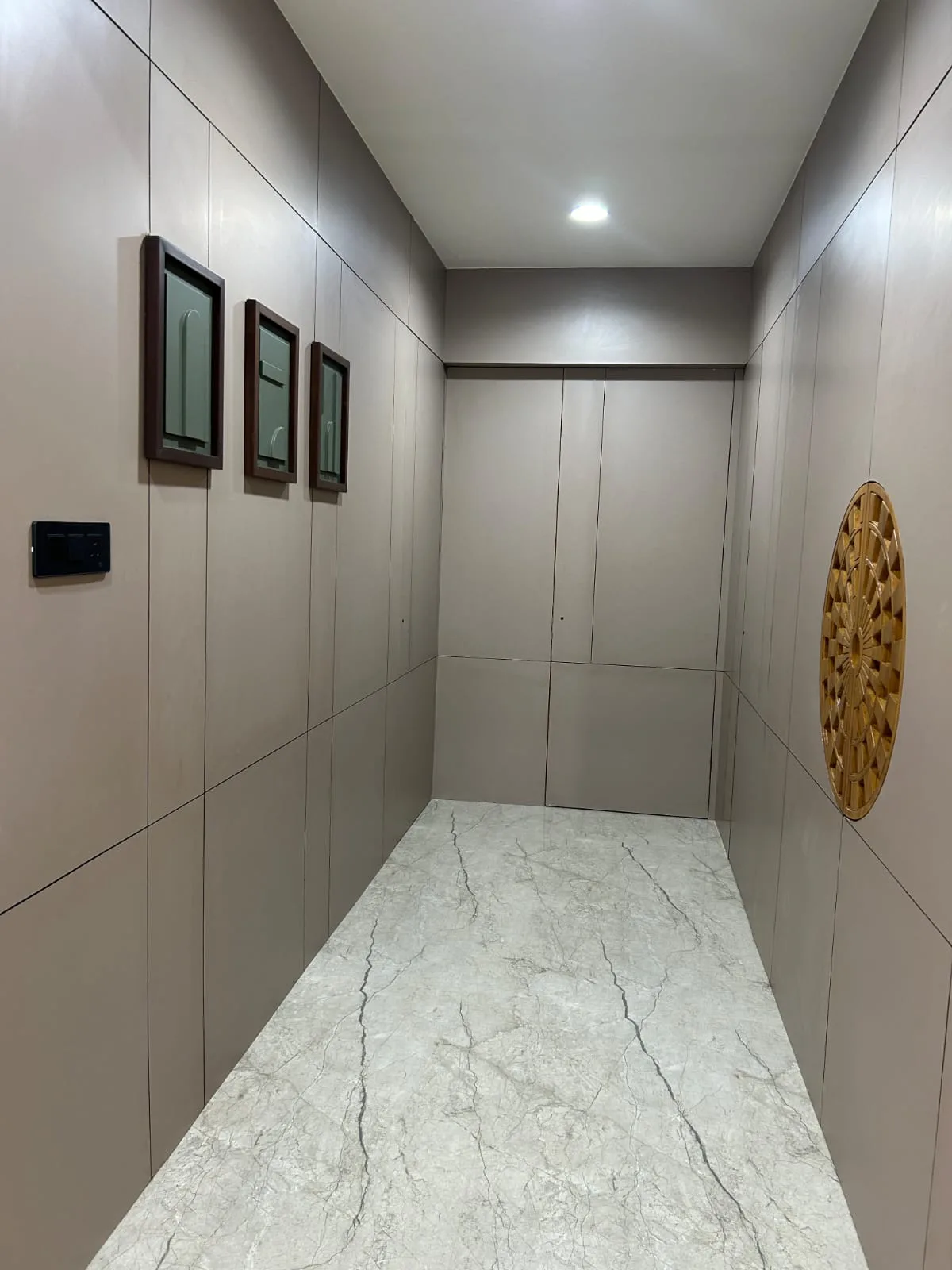
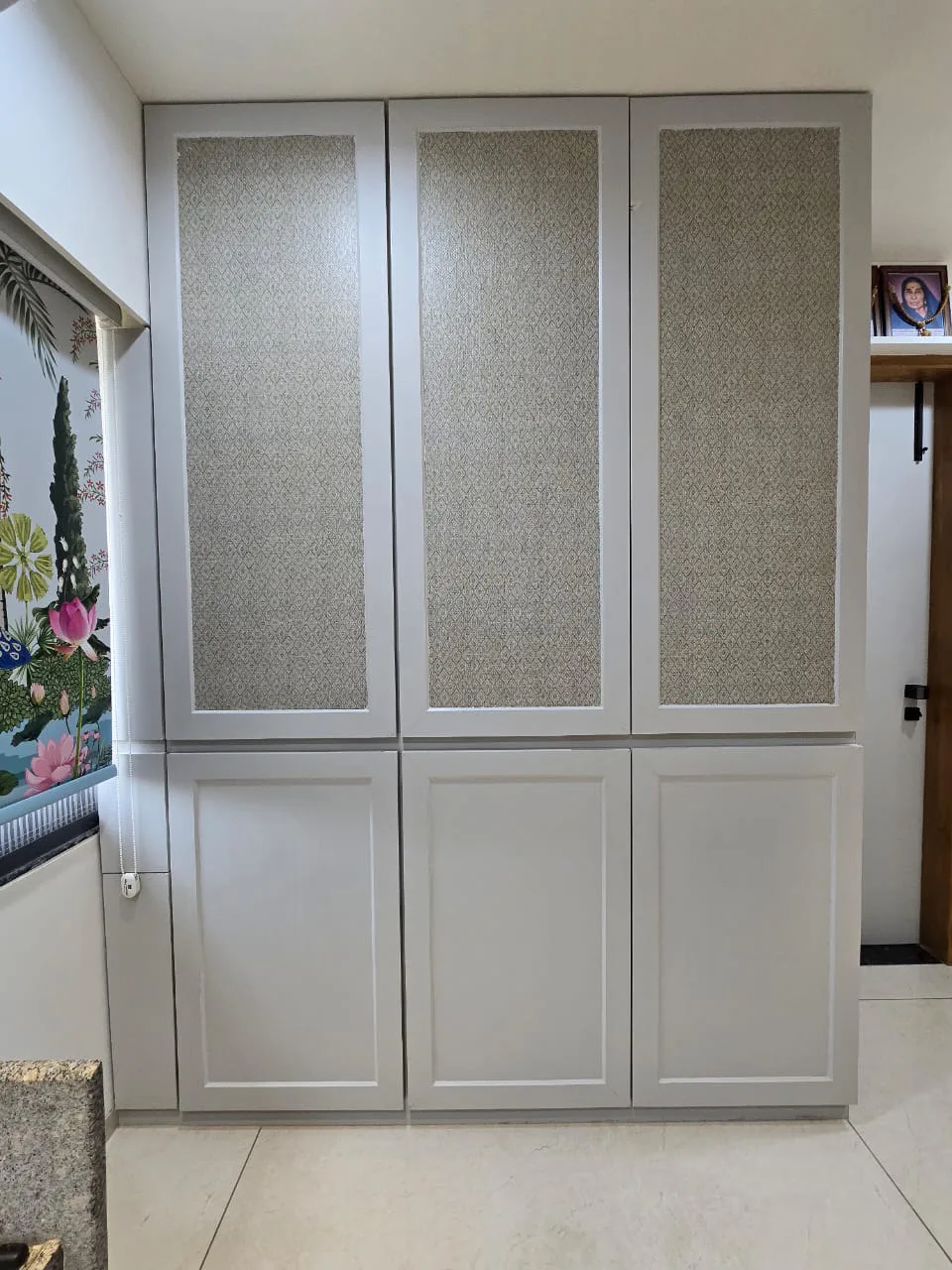
Panelled passage storage in marble and veneer, with concealed shutters and integrated lighting

Detail

Dust, reach and the
height of a stack.

Three unglamorous things decide whether you will still like this unit in year five.

Dust: sealed glass shutters, not open niches — this city gives you no quarter. Reach: everyday plates between hip and shoulder, the wedding-gift dinner service up in the loft. Stack height: shelves spaced to the actual plates you own, because a shelf with sixty millimetres of dead air above it is a shelf you paid for and cannot use.

  • Sealed, dust-resistant glass shutters
  • Soft-close hinges & lift-up fittings
  • Warm or neutral shelf lighting, dimmable
  • Veneer, laminate & fluted carcass faces
  • Glass, stone or solid-surface counter ledge
  • Adjustable shelf pins for future re-spacing
See Our Dining Zones

Our Design Process

Eight stages. Zero surprises.

The crockery unit is surveyed, drawn, lit and installed alongside the rest of your interior — inside the same eight-stage Castle Design process.

01

Consultation

Understanding your lifestyle, requirements and budget.

02

Budget & Approval

A detailed quotation with complete transparency — no hidden lines.

03

Design & Planning

Space planning, design concepts and photoreal 3D visualization.

04

Material Selection

Choosing premium finishes, hardware, colours and textures together.

05

Manufacturing

Precision-crafted modular furniture, plus coordinated on-site work.

06

Execution

Professional installation under dedicated site supervision.

07

Quality Check

A thorough inspection of every joint, finish and fitting before sign-off.

08

Handover

Delivering a beautifully finished space, ready to enjoy from day one.

Questions

Display, storage
and everything between.

Where it should sit, how much glass is too much, and what really belongs behind a shutter. Call the studio — a designer will answer, not a script.

+91 88492 96750

On the path the plates take. It belongs on the wall between the kitchen and the dining table, so a serving dish can be carried out and a stack of plates put back without crossing the room twice. Tucked into a far corner it becomes decoration; placed on that line it becomes the busiest cabinet you own.

Less than most people first imagine. Glass-shuttered display is for the dinner set, the crystal and the pieces you actually want lit. Everything else — the mismatched steel, the plastic tiffins, the spare tablecloth — belongs behind a solid shutter, because a display cabinet full of clutter reads as clutter lit from within.

With slim profile lights recessed into the front edge of each shelf, so the light falls down the face of what is on display instead of glaring back at you. Warm white flatters brass and wood; a neutral white keeps white porcelain looking white rather than yellow. Glass shelves let the light carry to the shelf below.

Yes. A bar section usually wants a taller open bay for bottles, a stemware rack under a shelf so glasses hang inverted and stay dust-free, and a small closed drawer for openers and coasters. If you want it discreet, it can sit behind a lift-up or bi-fold shutter and disappear entirely when it is closed.

By shuttering the display rather than leaving it as open shelving, and by fitting a proper seal on the glass doors. Open niches look striking in a photograph and then need wiping every week. In an Ahmedabad home, with the dust this city carries, we would rather give you glass you can see through and never have to dust behind.

Shallow top drawers with fitted cutlery inserts, then deeper drawers below for serving dishes, casseroles and the platters that never fit anywhere. Deep drawers on full-extension runners are far more useful than a deep shutter cupboard — you pull the whole thing out instead of reaching blindly into the back.

Related

Built on the same
side of the house.

All Modular Services

Modular Kitchens

The work triangle, the tall unit and the chimney duct — settled before a single shutter is chosen.

Explore

TV Units

Screen height from the sofa, cables in conduit, and a back panel that meets the ceiling cleanly.

Explore

Customized Furniture

Dining consoles, bar counters and partitions built for the gap you have, down to the millimetre.

Explore

Luxury Apartments

The whole flat planned end to end, so the dining zone is not an afterthought in someone else’s layout.

Explore

Associated Brands

The names we
build with.

Cores, hardware, laminates and finishes are specified from brands that stand behind their warranty — because the parts you never see decide how long the ones you do see keep looking right.

  • Hettich
  • Godrej
  • Blum
  • Häfele
  • Ebco
  • Grass
  • Greenply
  • CenturyPly
  • Action TESA
  • Merino
  • Virgo
  • Greenlam
  • Royale Touche
  • Advance Laminates

Start your project

Talk to a designer
about Crockery Units.

Tell us a little about the space. A designer — not a call-centre — calls you back within one working day with straight answers on scope, timeline and cost.

  • A free first consultation
  • Photoreal 3D before anything is built
  • A line-by-line written quotation